
"drought resistance"
300 article(s) found

Introduction of Yunnan Coffee Bean varieties with large grains and small grains
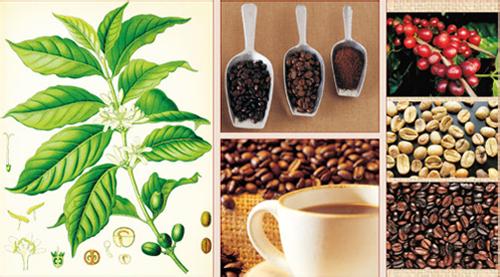
Cymes are clustered in leaf axils, each inflorescence has 2-5 flowers, without total pedicel or with very short total pedicel; flowers fragrant, with pedicels 0.5-1 mm long; bracts basally somewhat connate, dimorphic, of which 2 are broadly triangular, nearly equal in length and width, the other 2 lanceolate, twice as long as wide, leaf-shaped; calyx tube-shaped.

To show you the true face of coffee.
Small and round dark brown coffee beans, quietly emitting a fragrant fragrance in the grinder, injected into the cup showing the beautiful color of amber, these are the three very deep impressions of coffee. As you explore the history and beauty of coffee, you can also see the coffee trees that are caressed by the tropical sun and whose leaves twinkle. It has small white flowers similar to jasmine.

What are the four main types of coffee trees?
Ethelsa species Ethelsa species is a variety discovered only in 1904, native to the Charlie River Valley in Africa, small fruit, high yield per plant, especially a drought-resistant variety. The product has strong flavor and slightly bitter taste. It is less cultivated in Liberia. Liberia is a large-grain species. It is native to Liberia in Africa and a few countries such as Malaysia. It's been cultivated longer

What kind of Coffee is Catimor? is catimor Coffee Arabica genetic background?
Professional coffee knowledge exchange more coffee bean information Please follow Coffee Workshop (Wechat official account cafe_style) Catimor was developed by scientists in Portugal in 1959 to find magic recipes for high yield, high disease resistance and small plants (that is, high-density cultivation). This variety is Diwen hybrid.
High-yield cultivation techniques of Coffee in Hainan
In order to make the standardized planting technology of coffee easy to learn and understand, the Institute of Flavor and Beverage of the Academy of Thermal Sciences has also compiled "High-yield cultivation techniques of Coffee", "Diagram of High-quality and High-yield cultivation techniques of small-grain Coffee", "Coffee cultivation and Primary processing Technology", "standardized production Technology of small-grain Coffee" and other atlas and books, which are given to coffee planting free of charge. The "breeding of 8 clones of medium-grain coffee" developed by the institute has won the country.

China Coffee Bean Grade Grinding Grade Origin-China Coffee Net
Robusta is a leaf rust tolerant variety found in the Congo, Africa, and is more resistant to disease, pests, drought, and cold than Arabica. Robusta species grow in high temperature and wet areas, and are widely cultivated in lowlands and plains below 1000 meters above sea level. Robusta beans have one

The difference between small seed, medium seed and large seed of coffee how does the brand brew flavor describe the taste
Coffee small seed, medium seed, large seed of the difference between brands how to brew flavor description taste, also known as Liberian species, for evergreen trees. The plant is tall, more than 10 meters high, the branches are thick and hard, grow obliquely upward, and the branches cork the fastest. The leaf blade is oval or round, the leathery leaf surface is glossy, the leaf end is closed, and the leaf margin is not corrugated. The fruit is large, oblong, hard and thick in skin and pulp, and navel.

What are the varieties of Kenyan coffee beans SL28 and SL34? Why are Kenya AA coffee beans so sour?
Professional coffee knowledge exchange more coffee bean information Please follow Coffee Workshop (Wechat official account cafe_style) located in East Africa Kenya is one of the major coffee producing countries. More than 6 million people in the country are engaged in the coffee industry, mostly in the form of a combination of small farmers and cooperatives. Coffee trees in Kenya are mostly planted at 1400-2000 meters above sea level, and the growth areas include Ruiri and Thi.

What's the flavor of the Gatundu Karinga producing area in Kenya? How is the coffee growing environment in Kenya?
Professional coffee knowledge exchange more coffee bean information please follow the coffee workshop (Wechat official account cafe_style) how is the flavor of Gatundu Karinga producing area in Kenya? How is the coffee growing environment in Kenya? Karinga coffee contains dark fruit flavors-rich grapes, plums, blackcurrants, good citrus and tannin acidity, and deep brown sugar sweetness
Special "requirements" for the growth environment of small-grain coffee
Small seed coffee is native to the lower part of the Ethiopian rainforest in northern Africa. The temperature is relatively low, with an average annual temperature of 20 degrees. The origin of medium-grain coffee is near the equator. Therefore, small seed coffee has stronger cold tolerance and wider adaptability than medium grain coffee. Medium-grain coffee requires a slightly higher temperature.
Starbucks occupied Pu'er and tea farmers turned into coffee farmers.
Pu'er City, Yunnan Province, which gets its name from tea, has become the most widely planted and most productive coffee producing area in China in recent years. Local farmers say that since growing tea and crops is not as profitable as growing coffee, they have planned to switch to coffee after the wheat harvest.

Introduction to Yunnan Fine Coffee varieties, Flavor, taste, Iron Card, Fine Coffee beans
Speaking of which, I think there should be some judgment on the varieties of coffee in Yunnan. What about the excellent iron pickup and bourbon before? In the new promotion and planting, there are still many hills left to continue to grow old varieties of coffee, but, generally speaking, backward places do not have the protection of origin and a single species, a mountain, 10 families, all kinds of people, a gust of wind blowing, pollen flying everywhere. Oh.
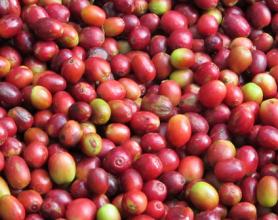
Description of Taste and Flavor of Yunnan Tieka Coffee beans introduction to the producing areas of Grinding scale varieties
Yunnan Tieka coffee beans taste and flavor description grinding scale variety production area introduces the environmental problems of coffee cultivation, although it can reach the hot area standard, it is far away from the equator, the problem of evaporation, and the large-scale Yunnan coffee planting area is less than 1100m above sea level. in recent years, the severe drought in Yunnan, as well as the frost period in the producing areas, all make it impossible to guarantee the cultivation of coffee, which directly affects the production of coffee.
Comprehensive data of Chinese Coffee Yunnan Simao small seed Coffee
Coffee is an advantageous and characteristic industry in the hot area of our city, and it is also one of the main agricultural products that our city exports to earn foreign exchange. In order to standardize the production technology, product standards and marketing behavior of coffee industry in our city, and improve the standardization level of coffee industry, the comprehensive standard of Pu'er small seed coffee was compiled according to the requirements of GB/T1.1 and GB/T1.2. This section defines the terms and definitions in the initial processing of small seed coffee.
Environmental requirements for planting small seed Coffee in Yunnan
Based on the natural conditions of Yunnan, coffee planting areas should be selected where the annual average temperature is more than 18 degrees, the coldest monthly average temperature is more than 11.5 degrees, the monthly average temperature is less than 13 degrees within two months, and the extreme lowest temperature is above zero in general.

Effect of Climate on Coffee Price and Flavor
We all believe that climate change affects the world, but few of us believe that climate change will affect us. We all believe that climate change affects the world, but few of us think that climate change will affect us. But when warm winters and severe storms hit, the effects of climate change will be understood. What will global warming bring to coffee? Climate warming will make bacteria and diseases
Growth habits and planting techniques of Coffee trees
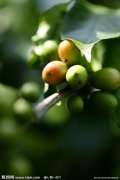
First, the growth habit of coffee is warm, drought-tolerant, not cold-resistant, afraid of freezing, seedlings and adults are easy to be defoliated to death by frost, and the seeds can not mature. Coffee is not strict on the land, idle land can also be planted, but with good drainage, deep soil, loose and fertile sandy soil is appropriate. Second, seed selection of planting techniques: before sowing, the germination rate of seeds should be tested. Specific method: the full grain

Introduction to the Soul of Coffee Bean
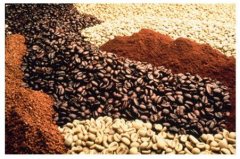
What is the essence of a cup of coffee? Coffee as its name implies, the raw material of coffee is the most important. The main raw materials for making coffee are small and round dark brown coffee beans, which quietly emit a fragrant fragrance in the grinder and show a beautiful amber color in the cup. These are the three very deep impressions that ordinary people have on coffee. While you are exploring the history and grace of coffee

Introduction to the production area of grinding scale varieties of coffee with Liberian flavor description treatment method
Coffee bean Ethel sa was discovered in 1904, a variety originated in the Charlie River Basin in Africa, small fruit, high yield per plant, especially a drought-resistant variety. The product has a strong flavor, slightly bitter taste, cultivated less Liberian species, that is, large-grained species, originated in Liberia in Africa, as well as Malaysia and other few countries. Its cultivation history is slightly shorter than that of the other two coffee trees.
The requirements of Coffee on Ecological Environment
Small seed coffee is native to the lower part of the Ethiopian rainforest in northern Africa. The temperature is relatively low, with an average annual temperature of 20 degrees. The origin of medium-grain coffee is near the equator. Therefore, small seed coffee has stronger cold tolerance and wider adaptability than medium grain coffee. Medium-grain coffee requires a slightly higher temperature. First, the requirement for temperature should be based on the natural conditions of Yunnan, and the suitable planting area of coffee should be selected.